The social service workforce plays a critical role across sectors, as part of an integrated child protection system that can protect children from all forms of violence. The workforce can more effectively reach the most vulnerable individuals and communities with support and services by working not only as part of the social protection and social welfare systems, but working in and linked with services and settings in health, education and justice sectors, and in disaster risk reduction and climate change adaptation and resilience.
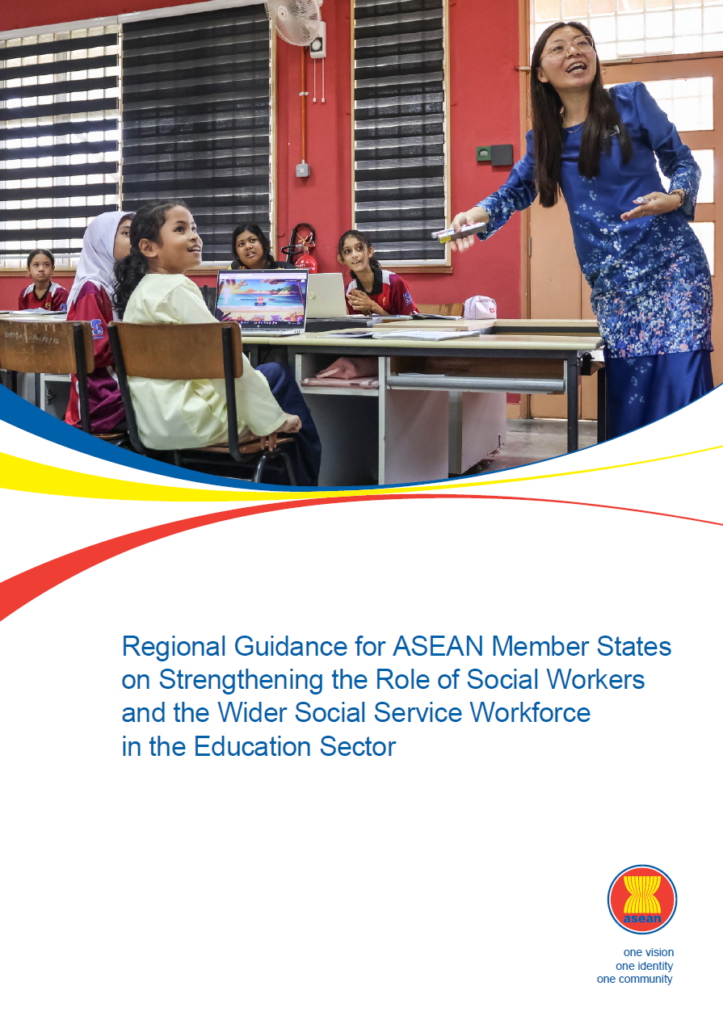
This ASEAN guidance is part of a set of regional guidance papers developed for ASEAN Member States (AMS) with the support of UNICEF that explore and outline the role of the workforce in these different sectors and settings. This paper, focusing on the role of social workers and the wider social service workforce in the education sector, is intended to support policy makers and decision makers in the fields of education and social welfare, school leaders and teachers, and managers and members of the social service workforce. It is written to help these stakeholders in AMS to consider the ways in which the social service workforce can be most effectively deployed in or linked with schools and pre-school settings.
The guidance sets out how such cross-sectoral deployment can lead to enhanced and more sustained positive outcomes for school age-children and their families. These include addressing underlying psychosocial factors to prevent school drop-out and contribute to improvements in students’ school attendance, learning and achievement, in a gender-responsive way, while helping create a caring and safe whole school environment. It also cover ways in which social service workers, when working in or linked with specific schools and pre-school settings, can engage with and support students and their families on wider issues, including students’ emotional wellbeing and mental health, and the stigma associated with mental health issues. Furthermore, it deals with how social service workers can work with teachers to enrich the content of lessons to include engaging content on social and emotional learning, positive gender socialisation and gender role modelling, and development of 21st century transferable life skills. Finally, this paper considers the role of the social service workforce in schools in prevention and protection of students from all forms of violence, abuse and neglect, through identifying concerns, and making referrals to connect children in need and at risk with the wider child protection system.