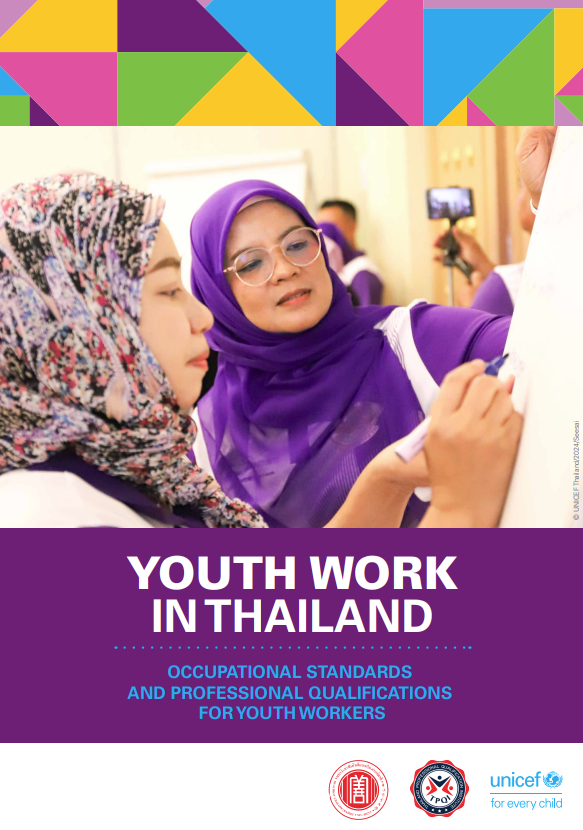
Although youth work is already practised throughout the country, the concept and role of youth work in Thailand remain vague. Unlike other social service practices, the youth work sector lacks uniform standards for measuring quality and defining professional competencies. Evidence from international practice in the development of formal standards shows that the professionalization of youth work increases levels of trust between young people and the youth workers and mitigates risk factors; increases the quality of youth work practice; ensures that outcomes are delivered more efficiently; promotes regulation and control within the sector; and provides motivation for ongoing education and development.
The Occupational Standards and Professional Qualifications for Youth Workers in Thailand have been developed through a participatory process involving civil society, government agencies, young people and professionals working with young people, and are based on global best practices in youth work.
The publication encompasses five key functional areas:
- Work with young people effectively.
- Promote and safeguard the well-being and safety of young people.
- Facilitate learning and development of young people through participatory approaches.
- Demonstrate commitment to the promotion of young people’s rights and responsibilities.
- Contribute to driving youth-related strategies and policies.